 HR
 EN

Your Brain on Stress
What actually happens in your brain when you’re stressed: what the stress response really is, why you suddenly struggle with things you normally handle, why some memories stick while others slip away, what it costs when the system stays switched on, how stress and sleep feed each other, why people cope so differently, and what helps your brain stand down.
Written by Ivana, psychologist and psychotherapist
Detailed explains the research and the reasons behind each point. Plain words gives the same main points in short, everyday language. Safety advice and emergency steps are the same in both.
You’ve probably noticed that stress can make you feel strangely unlike yourself. You forget things you normally know. You read the same sentence three times. Little things irritate you far more than usual, and small decisions suddenly feel huge. You might spend a whole day thinking about the thing that’s stressing you, even while you’re technically doing something else.
Then there’s the especially annoying part: you finally get some time to relax, and your brain apparently didn’t get the memo. It’s easy to decide you’re just “bad at handling stress.” But that misses what’s actually going on. When you’re stressed, your brain isn’t broken. It’s changing how it spends your attention, energy, memory and emotions, because it has decided something needs dealing with. Stress is your brain adapting, not your brain failing.
The same system that helps you rise to a challenge can also leave you scattered, on edge, exhausted, forgetful or overwhelmed when it stays switched on for too long. So what’s actually happening in there? It’s a question I love, because the answer is where the body and the mind stop looking like two separate things. If you’d like everything in plainer words, flip the switch above.
The short version
You might have heard that stress is shrinking your brain, or that you should just learn to relax. The truth about how stress affects the brain is more specific than either, and much more useful. Here are six things worth knowing before the long version.You might have heard that stress is shrinking your brain, or that you should just learn to relax. What stress does to your brain is more specific than either, and more useful to know. Here are six things worth knowing.
- 01
The forgetting, the sentence you read three times, the small decision that suddenly feels huge: that’s your brain moving attention, energy and memory toward whatever it thinks matters most.When you forget things, reread the same sentence or a small choice suddenly feels huge, your brain is moving its attention, energy and memory toward whatever it thinks matters most.
- 02
Stress can make you forget this morning and remember 2017 forever.
It can make it harder to get information back out, while helping emotional moments stick. Same hormones, different stages of memory.It can make it harder to get things back out of your memory, and help emotional moments stick. The same hormones do both, at different steps of memory.
- 03
More stress doesn’t simply mean worse thinking.More stress doesn’t always mean worse thinking.
A bit of stress before something that matters can sharpen you. The trouble starts when a system built for emergencies takes over moments that need patience and reflection.A bit of stress before something that matters can sharpen you. Trouble starts when a system built for emergencies takes over moments that need patience and careful thought.
- 04
Nobody can read off your “stress score.”Nobody can measure your “stress score.”
Allostatic load is a way researchers study several body systems at once, not a blood test or a number you can be at.Researchers use an idea called allostatic load to study several body systems at once. It isn’t a blood test or a number you can be at.
- 05
Exhausted and wired isn’t a contradiction.You can be exhausted and wired at the same time.
Poor sleep makes your stress system more reactive, which makes the next day harder, which costs you more sleep. You can be very tired and on high alert at the same time.Poor sleep makes your stress system react more strongly, which makes the next day harder, which costs you more sleep.
- 06
Resilience isn’t something you either have or don’t.
The same person can cope well in one situation and be overwhelmed in another. It depends a lot on circumstances, which is the hopeful part, because circumstances can change.Resilience means being able to cope and recover. The same person can cope well in one situation and be overwhelmed in another. It depends a lot on circumstances, which is the hopeful part, because circumstances can change.
The long version explains what each of those rests on, and where the evidence stops. It ends on the question that matters most: not how to put up with more stress, but what would show your brain that it’s allowed to stand down.The parts below explain what each of these rests on, and where the evidence stops. The last part asks what would show your brain that it’s allowed to stand down.
WHAT THIS ARTICLE COVERS · SEVEN PARTS
PART 1What the stress response actually is2 sections · 3 min2 min
PART 2How stress affects the brain and your thinking2 sections · 3 min2 min
PART 3Memory, attention and context3 sections · 5 min2 min
PART 4The cost of staying switched on2 sections · 3 min2 min
PART 5Sleep, and the rest of the body2 sections · 2 min1 min
PART 6Why people differ, and what helps3 sections · 3 min2 min
Beat 1 of 7
What the stress response actually is
Two systems, one quick and one slow, and why the meaning of an event matters as much as the event
In plain words
When something feels threatening, demanding, unpredictable or out of your control, your brain gets your whole body ready to deal with it. Two systems do most of this work.
The first one is fast. It’s called the sympathetic nervous system, and within seconds it makes you more alert, speeds up your heart and gets more energy ready.
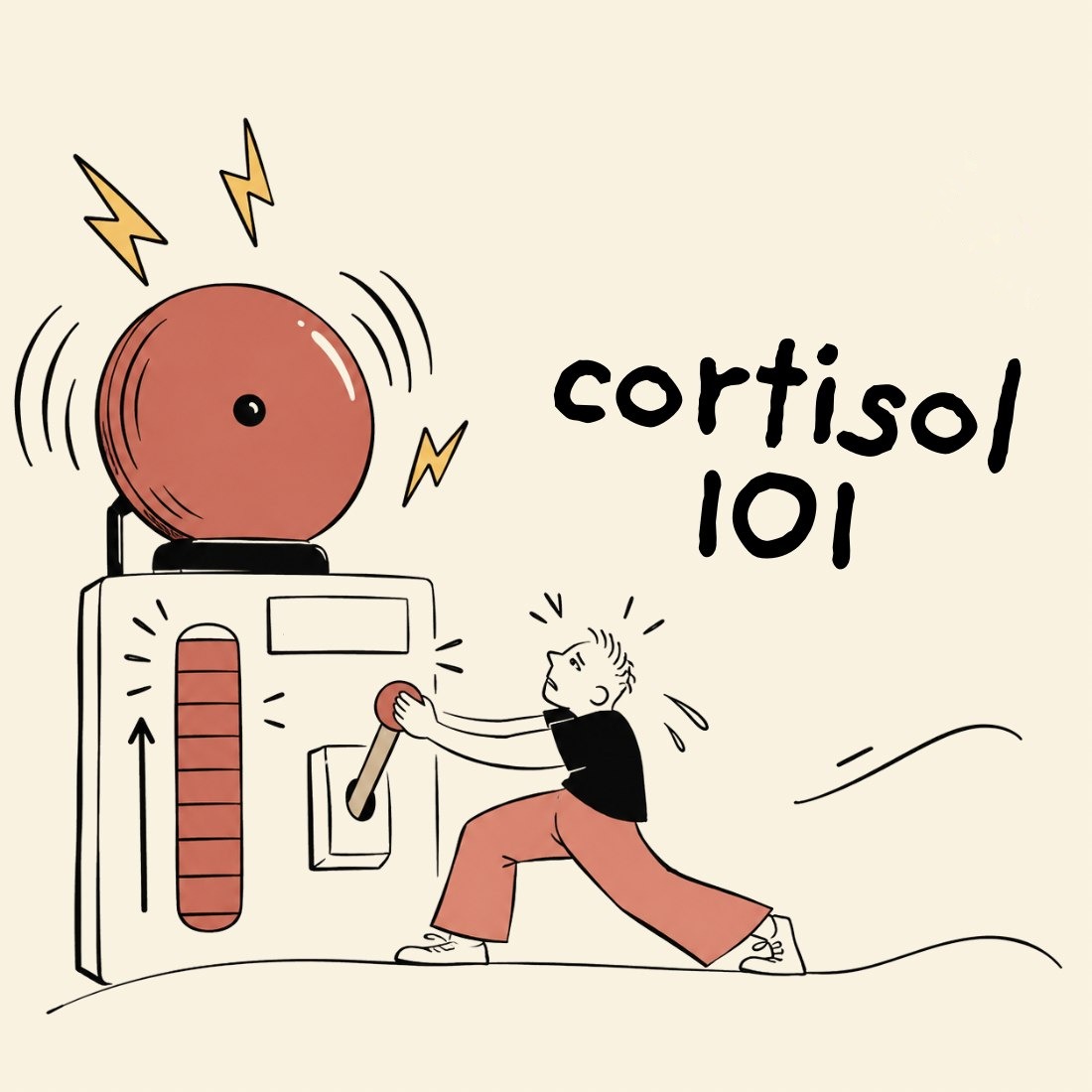
The second one is slower, and it lasts longer. It’s called the HPA axis. A message passes down a chain, from the hypothalamus in your brain to the pituitary gland, just under the brain, and then to the adrenal glands above your kidneys, which release a hormone called cortisol. Cortisol has a bit of a villain reputation, but cortisol isn’t bad. You need it! It helps run your metabolism, your immune system, your heart and blood vessels, and your energy when life gets demanding.
Stress turns into a problem when these systems keep switching on, or stay on for a long time, without enough chance to recover.
What a moment means to you matters as much as the moment itself. A deadline, an argument with someone you love, money worries, pain that won’t go away, a bad night’s sleep, being left out and real physical danger all look very different from the outside. They can still switch on many of the same stress systems inside you.
Under stress, your brain changes its priorities, and a lot of the time that helps. A bit of stress can sharpen you before a big presentation. Or say a car horn blares while you’re crossing the road. You don’t want your brain calmly weighing up seventeen possible interpretations. You want it to get you out of the way! Research on stress and thinking skills finds that the effect depends a lot on how strong the stress is, when it hits, what you’re trying to do and who you are.
First, stress is not just a feeling
When something feels threatening, demanding, unpredictable or out of your control, your brain starts coordinating a response across your whole body. Two main systems do this work. The first is the sympathetic nervous system, and it’s fast. It raises your alertness, heart rate and blood pressure, and makes more energy available. Adrenaline and noradrenalinenoradrenalineBoth a hormone the body releases and a signal the brain uses to set its own alertness. The second job is why stress can leave you feeling wired rather than only physically ready. help get your body ready to act.
The second is the HPA axis, short for the hypothalamic-pituitary-adrenal axis, and it’s slower and lasts longer. It works like a relay: the hypothalamus signals the pituitary gland, the pituitary signals the adrenal glands, and the adrenal glands release cortisol. Cortisol has a bit of a villain reputation, but cortisol isn’t bad. You need it! It helps manage your metabolism, your immune system, your heart and blood vessels, and your energy when things get demanding.
The trouble starts when your stress systems switch on again and again, very strongly or for a long time, without enough chance to recover. And this is where your brain comes in, because it doesn’t only react to physical danger. It weighs up what’s happening, predicts what might come next and decides how big a threat something is. So what an event means to you matters enormously, not only the event itself.
A looming deadline, an argument with someone you love, money worries, chronic pain, a bad night’s sleep, being left out and an actual physical threat look very different from the outside. Yet they can all switch on overlapping stress systems inside you. Your brain is always asking some version of: What’s happening, and what do I need to do about it?
Your brain doesn’t put everything on pause. It changes priorities.
One of the most helpful ways to think about stress is as a change in priorities. When your brain picks up a big threat or demand, it moves resources toward dealing with it. Your attention swings toward whatever seems important. Emotions get louder. Your body gets ready to act. And a lot of the time, that’s genuinely useful.
Say you’re about to give an important presentation. A moderate rise in stress can make you more alert and focused. Or say a car horn blares while you’re crossing the road. You don’t want your brain calmly weighing up seventeen possible interpretations. You want it to get you out of the way! A bit of stress can actually help you perform, in the right moment. It isn’t simply “more stress = worse thinking.” Research on stress and thinking skills finds that the effect depends a lot on how strong the stress is, when it hits, what you’re trying to do and who you are.
The trouble begins when a system built for urgent demands starts running situations that need the opposite: flexibility, reflection, memory or long-term planning. And that’s where the front of your brain, the prefrontal cortex, gets really interesting.
Two systems, two speeds
both, every timeboth switch on, every time
The sympathetic nervous systemThe fast system (sympathetic nervous system)secondswithin seconds
Acts very quickly, and prepares the body to respond.Gets your body ready to act.
alertnessmore alert+heart ratefaster heartbeat+blood pressurehigher blood pressure+available energymore energy ready
The HPA axisThe slow system (HPA axis)slower, and sustainedslower, and lasts longer
A chain, each step signaling the next.A chain of messages. Each step passes the signal on to the next.
hypothalamus→pituitary gland→adrenal glands→cortisol
Beat 2 of 7
How stress affects the brain and your thinking
The parts of your mind that go missing under pressure, and where they have actually gone
In plain words
The front of your brain, the prefrontal cortex, does much of what you rely on to be a reasonably functional adult. It holds things in mind, keeps you focused, stops you acting on every impulse, makes plans and helps you switch from one idea to another.
Under a lot of stress, some of this can work less well, especially holding things in mind and thinking flexibly. The effect on self-control is more mixed.
That’s why you can suddenly struggle with things you normally handle, like answering an email or remembering what you went to the supermarket for. When you’re stressed, it can feel as if your brain has temporarily misplaced its fanciest features. Your skills are all still there. Stress makes them harder to reach in the moment.
Under sudden stress, the quick parts of your brain that spot threats and run habits get more say, and slow, careful thinking takes a back seat. That helps in an emergency. Modern life is full of moments where the better move is to sit down, think it through and send a sensible email. Your brain doesn’t always tell those situations apart as neatly as we’d like.
Then there’s the amygdala, a small almond-shaped part of the brain (fun bit of trivia: “amygdala” comes from the Greek word for almond). It’s often called the brain’s “fear center,” and that’s only part of the story. It helps you notice and learn from things that matter emotionally, especially anything that feels threatening or uncertain. Under stress, emotional things can stand out more, which shapes what you notice and remember.
It doesn’t just take over, though. The amygdala is always in conversation with other parts of the brain, including the prefrontal cortex. What happens depends on the situation, on what you’ve been through before, on timing and on the state your body is in. The popular story of stress as “primitive brain versus rational brain” is appealing, but the real brain is messier. And the messier version is more useful.
Why you suddenly become terrible at things you normally handle
The prefrontal cortex does a lot of what psychologists call executive functions: holding things in mind, focusing, stopping yourself from acting on impulse, planning, switching between ideas and working toward a goal. In other words, much of what you rely on to be a reasonably functional adult. Under a lot of stress, these can work less well.
Research suggests that stress can get in the way of working memory and flexible thinking. Its effect on self-control is more mixed than you might expect, and how much any of this happens depends a lot on the situation. This helps explain something that can feel very personal. You know how to answer that email. You know where you put the document. You know what you went to the supermarket for. You’re perfectly able to make the decision.
And yet, when you’re stressed, it can feel as if your brain has temporarily misplaced its fanciest features. That doesn’t mean your abilities have gone anywhere. Stress changes how easily you can reach your abilities in the moment, not whether you have them. Under sudden stress, the parts of your brain that spot threats quickly and run habits and well-practiced responses get more say, while slower, more deliberate thinking takes a back seat.
From an evolutionary point of view, this makes sense. When something urgent is happening, your brain doesn’t need a long philosophical debate about every option. It needs a response. The catch is that modern life is full of situations where the best response is to sit down, think it through, live with some uncertainty and send a sensible email.
Your brain doesn’t always tell those situations apart as neatly as we’d like.
And then there’s the amygdala
The amygdala is often called the brain’s “fear center.” It’s catchy, but it’s only part of the story. The amygdala helps your brain notice and learn from things that matter emotionally, especially anything to do with threat and uncertainty. Under stress, its activity, and the way it talks to other parts of the brain, can change. That can raise the saliencesalienceHow much something stands out and pulls attention toward itself. A salient thing is not necessarily important; it is the thing the brain has flagged as worth noticing. of emotional information and shape what you notice, what you remember and how your body responds.
That doesn’t mean your amygdala simply “takes over.” Your brain isn’t a neat chain of command where one small almond-shaped structure grabs the steering wheel while your rational brain sits helplessly in the passenger seat (fun bit of trivia: “amygdala” comes from the Greek word for almond). Stress responses run through networks. The amygdala is in constant conversation with the prefrontal cortex, the hippocampus, the hypothalamus, the brainstem and more, and what happens depends on the situation, your past experiences, the timing and the state your body is in.
This matters, because the popular story of stress as “primitive brain versus rational brain” is appealing, but the real brain is messier. And the messier version is more useful.
What helps when your head feels scrambled
- Remind yourself that this is stress, not you losing your touch.
- Write things down, so your memory doesn’t have to hold everything at once.
- If you can, leave the big decisions until things have settled a little.
Beat 3 of 7
Memory, attention and context
Why some things stick, why everything else feels peripheral, and what tells a brain the danger is over
In plain words
Stress does odd things to memory. You might forget what someone said five minutes ago, and still remember an embarrassing moment from years ago in sharp detail.
Memory works in steps, and stress hormones affect each one differently. Encoding is taking something in at the time. Consolidation is the memory settling into something lasting over the next hours and days, and a lot of that happens while you sleep. Retrieval is getting it back out later.
One of the better-established findings is that sudden stress can make it harder to get back things you already know. At the same time, stress hormones can help emotional moments settle in more firmly. Your brain is treating the moment as important, and its message is closer to “this mattered, pay attention” than “remember every detail.”
That can be useful. If something dangerous happens, remembering the warning signs can help you avoid it next time. Your brain isn’t a perfect judge of what to keep, though, which is how one humiliating sentence from a Tuesday in 2017 can stay with you for years. Brains are efficient, but they aren’t very tidy!
Why stress can make you remember some things extremely well and forget others
Stress has a complicated relationship with memory. You might not remember what someone said five minutes ago, and still have an unusually vivid memory of the embarrassing thing that happened eight years ago. There’s a reason for that. Stress hormones affect different stages of memory in different ways: taking information in, consolidationconsolidationWhat happens to a memory after the moment itself. Over the following hours and days it either settles into something lasting or it does not, and a good deal of that work happens while you sleep., and getting it back out later. What happens depends on the timing and on the kind of information.
One of the better-established findings is that sudden stress can make it harder to pull out things you already know. At the same time, stress hormones can help emotionally important experiences settle in more firmly. In other words, stress can make it harder to get information out of your memory, while making emotional moments more likely to stick.
That’s one reason stressful experiences can become so memorable. Your brain is treating the moment as important information. The message isn’t “Remember every detail.” It’s closer to “This mattered. Pay attention.” That can be really useful. If something dangerous happens, remembering the warning signs can help you avoid it next time.
But your brain isn’t a perfect judge of what deserves permanent storage. Sometimes it keeps the useful lesson. Sometimes it keeps the sound of someone’s voice, the exact look on their face, or one humiliating sentence from a Tuesday in 2017. Brains are efficient, but they aren’t very tidy!
Stress does not do one thing to memory
three moments, three answers
while it is
happening
EncodingTaking it in (encoding)
Taking it in at the time.What you notice while it happens.
“I was in the room for all of it and I could not tell you what was said.”
On the timing, and on the kind of information.On when the stress hits, and what kind of thing it is.
the hours and days
afterwards
ConsolidationLetting it settle (consolidation)
Whether it settles or does not.Whether the memory settles and lasts.
“An unusually vivid memory of the embarrassing thing that happened eight years ago.”
For experiences that were emotionally significant.For moments that mattered to you emotionally.
later, when you
need it back
RetrievalGetting it back (retrieval)
Getting it back out again.Finding it again when you need it.
“Knowing the answer the night before, and blanking on it in the room.”
Under acute stress, and under certain conditions.During sudden stress, in some situations.
When you’re stressed, your attention tends to lean toward anything that seems connected to the problem. That’s handy when there’s real danger in front of you. It helps far less when the “danger” is an unanswered message, or something that can’t be settled tonight.
And it can turn into a loop. The more you notice the problem, the more important it feels, and the more you notice things connected to it. Everything else starts to feel far away. That’s why stress can wear you out even when you’re not doing much. Your brain is working hard, and nobody can see that work from the outside.
Stress also changes what you pay attention to
When you’re stressed, your attention tends to lean toward anything that seems connected to the problem. That’s handy if there’s a real threat in front of you. It’s much less handy when the “threat” is an unanswered message, or an uncertain outcome that can’t actually be settled tonight. And it can turn into a loop. You notice the stressful thing. You think about it. Thinking about it makes it feel more important. You notice more things related to it. Those things remind you of the original worry. Now it feels even more important.
And because your attention is more and more organized around the problem, everything else starts to feel oddly far away. This is why stress can be mentally exhausting even when you’re not doing much. Your brain is working hard. You just can’t see that work from the outside.
Why it does not switch off
six steps, each one reasonablesix steps, and each one makes sense
- 1You notice the stressful thing.
- 2You think about it.
- 3Thinking about it makes it feel more important.
- 4You notice more things related to it.
- 5Those things remind you of the original concern.Those things remind you of the original worry.
- 6Now it feels more important still.
And back to the first step, which is why it is exhausting.
Then there’s the hippocampus, a part of the brain that’s important for memory and for making sense of context. It’s also involved in keeping the stress response in check.
Context is what tells you the difference between “this is dangerous” and “this reminds me of something dangerous.” A loud bang means one thing when you’re walking alone somewhere unfamiliar at night, and something else when you’re safe at home and it turns out to be the heating. Context changes what something means.
You may have read that stress “shrinks your hippocampus.” That’s an oversimplification: most of the evidence comes from animal studies, and a difference on a brain scan can’t show that stress caused a change in one particular person.
The fairer summary is that long-term stress can affect memory and emotion, for better or worse, briefly or lastingly.
Then there’s the hippocampus. It’s important for memory and for making sense of context, and it’s also involved in keeping the stress response in check. Context is what lets your brain tell the difference between “this is dangerous” and “this reminds me of something dangerous.” That difference matters a lot.
Imagine hearing a loud bang. If you’re walking alone somewhere unfamiliar at night, your brain may read it very differently than if you’re safe at home and realize it was just the heating. The sound alone isn’t enough. Context changes what something means. Long-term stress can affect how the hippocampus works and how it talks to other brain systems. Research suggests that stress over a long time can change the brain’s structure and function, although popular write-ups often make this sound far more dramatic for any one person than it is.
WORTH BEING CLEAR ABOUT
The hippocampus claim is usually overstated
You might have seen the claim that stress “shrinks your hippocampus.” That’s an oversimplification. Much of the evidence for how it might happen comes from animal studies, and the human findings are more complicated. Lots of things shape brain structure, and a difference on a brain scan doesn’t tell us that stress caused a particular change in a particular person.
The fairer conclusion is this: long-term stress can affect the brain systems involved in memory, emotion and self-regulation, and those effects can be helpful or unhelpful, and temporary or lasting, depending on the circumstances.
Beat 4 of 7
The cost of staying switched on
What adaptation costs when it never gets to stop
In plain words
Your body is good at adapting. All day long it keeps adjusting to what’s happening, so your heart rate, blood sugar, hormones, attention and immune system all shift. Researchers call this allostasis, which roughly means staying stable by changing.
Adapting has a cost, though. If your stress systems switch on too often, stay on too long or don’t switch off properly, wear and tear builds up. Researchers call this allostatic load. Think of it as “my body keeps being asked to work hard,” more than “my cortisol is always high.”
Allostatic load isn’t a diagnosis, and no simple blood test can tell you how stressed you are. Researchers use it to study several body systems at once, and it’s complicated to measure. Your nervous system is not a phone battery sitting at 17%. Your body is a lot more interesting than that!
It helps to tell short-term stress from long-term stress. Short-term stress, also called acute stress, comes and goes. You deal with the situation, and ideally your body settles back down. Long-term stress, also called chronic stress, is different, because the pressure keeps going, keeps coming back or feels impossible to escape. That might be money worries, caring for someone, a long-term illness, or lots of small stresses that never give you a chance to settle.
Being able to react to stress is healthy. The problem is not getting the chance to recover. So managing stress shouldn’t only mean learning to put up with it forever. Recovery is part of the biology!
Your body is remarkably good at adapting. Researchers sometimes call this allostasis, which roughly means “staying stable by changing.” Your body doesn’t keep exactly the same internal state all day. It keeps adjusting to what’s happening. Your heart rate changes. Your blood sugar changes. Your hormones, your attention and your immune system all shift.
That flexibility is a feature, not a bug. But adapting has a cost. If your stress systems switch on too often, stay on too long or don’t switch off properly, the wear and tear that builds up is sometimes called allostatic load. Think less “my cortisol is permanently high” and more “my body keeps being asked to work hard.”
WHERE THE EVIDENCE STOPS
Allostatic load is a framework, not a score
Allostatic load isn’t a diagnosis, and there’s no simple blood test that tells you how “stressed” you are. It’s a way researchers study several body systems at once, including hormones, the heart and blood vessels, metabolism and the immune system. Higher allostatic load has been linked to poorer health, although measuring it and making sense of it is complicated.
It’s tempting to turn complicated biology into a quiz score. Your nervous system is not a phone battery sitting at 17%. Your body is a lot more interesting than that!
Chronic stress is different from having a stressful week
It also helps to separate short-term stress from long-term stress. Short-term, or acute, stress is a passing response to a challenge. Your body gathers its resources, you deal with the situation, and ideally everything settles back down. Long-term, or chronic, stress is different, because the demand keeps going, keeps coming back or feels impossible to escape. That could be a genuinely hard situation, ongoing conflict with someone close to you, money worries, caring for someone, a long-term illness, pressure at work, broken sleep, or lots of smaller stressors that never quite give your system the chance to settle.
This matters because the stress response itself isn’t the enemy. The ability to mount a stress response is part of healthy functioning. The problem is not getting the chance to recover. That’s why “managing stress” shouldn’t just mean learning to put up with being stressed forever. Recovery is part of the biology!
Acute and chronic are different shapes
schematic, and yours to movea drawing, and yours to move
Back to rest. The system comes all the way down between demands. Five peaks, one baseline.
Beat 5 of 7
Sleep, and the rest of the body
Two places the loop closes on itself
In plain words
Stress and sleep have an irritatingly two-way relationship. Stress can get in the way of sleep, and poor sleep can make your stress system react more strongly.
So you can end up in a loop that keeps itself going. That’s how someone can say, completely truthfully, “I’m exhausted, but I can’t switch off” (also known as 2 a.m., phone in hand).
Sleep makes this even more complicated
Stress and sleep have an irritatingly two-way relationship. Stress can get in the way of sleep, and poor sleep can make your stress system react more strongly.
WHAT THE RESEARCH SUPPORTS
A systematic review of studies in people found that poorer-quality sleep can make the HPA axis react more strongly to stress in the lab.
So you can end up in a loop like this. Stress makes it harder to sleep. Poor sleep makes your stress system more reactive. Increased reactivity makes tomorrow feel harder. Tomorrow creates more stress. And now the cycle keeps itself going. That’s how someone can say, completely truthfully, “I’m exhausted, but I can’t switch off” (also known as 2 a.m., phone in hand). Being exhausted and being wired aren’t opposites. You can be deeply tired while the parts of you that watch for threats are still wide awake. That combination is miserable, but it isn’t mysterious.
Why it keeps going
stress and sleep, each feeding the other
- 1Stress makes it harder to sleep.
- 2Poor sleep makes your stress system more reactive.Poor sleep makes your body react more to stress.
- 3Increased reactivity makes tomorrow feel harder.Reacting more makes the next day feel harder.
- 4Tomorrow creates more stress.The harder day brings more stress.
And back to the first step, which is why it keeps itself going.
Stress doesn’t stop at the brain. Your nerves, hormones and immune system are in constant conversation, so stress that keeps going can change how inflammation is controlled and add wear and tear to the body.
That doesn’t mean stress just “causes inflammation,” or that every symptom is cortisol’s fault. The links between stress, inflammation and illness vary from person to person and from one condition to another.
The basic idea is still solid enough to take seriously. What you go through in your mind can change how your body works, and your brain is one of the main coordinators of that. You’re not a brain floating around inside a body. Your brain is part of your body, and stress reminds us of that pretty forcefully.
NOT QUITE THAT SIMPLE
Stress doesn’t simply cause inflammation
The stress response doesn’t stop at the brain, either. Your nervous system, your hormones and your immune system are in constant conversation. Short-term stress can change inflammation signals in ways that may help in the moment. But stress that keeps going has been linked to changes in how inflammation is regulated, and to wider wear and tear on the body.
This is another place where nuance matters. It wouldn’t be accurate to say that stress simply “causes inflammation” and then blame every symptom on cortisol. The immune system is enormously complicated, and the links between stress, inflammation and illness vary from person to person and from one condition to another.
But the basic idea is solid enough to take seriously: what you go through psychologically can change how your body works, and your brain is one of the main coordinators of that conversation. You’re not a brain floating around inside a body. Your brain is part of your body, and stress reminds us of that pretty forcefully.
Beat 6 of 7
Why people differ, and what helps
Resilience as something that happens rather than something you have, and why the ordinary things are the ones that work
In plain words
Some people seem to handle stress better than others, and it’s easy to think they were born with a better nervous system. It’s much less fixed than that. People differ in how strongly they react, how quickly they recover, what their past has taught them to expect and how much support they have.
Researchers increasingly see resilience, the ability to cope and recover, as something that changes with your circumstances. The same person can handle a sudden crisis well and struggle with months of uncertainty. There’s no single “resilient brain.” How you cope is shaped by biology, experience, sleep, relationships, your surroundings, what you do, and probably plenty of things nobody understands well yet.
A life with no stress at all wouldn’t be good for you, either. You need to be able to get alert when something matters, find energy when you need it, feel excited and care how things turn out. The goal is flexibility. Can your system switch on when something matters, and stand down when it’s over? Can your attention come back to other things? Can your brain tell a problem happening now from an old one? Can your body feel safe without looking straight away for the next threat?
That’s also why “just relax” isn’t much help. Sometimes you can’t think your way out of a state your body is in. Your brain and body affect each other in both directions, though, so what you do, think and notice can change how your body settles. This is why things that look almost insultingly ordinary can matter!
So why do some people seem to handle stress better?
This is one of the most important questions, because “stress resilience” is often talked about as if some people were simply born with a better nervous system. It’s much less fixed than that. People differ in how strongly they react to stress, what feels threatening to them, how quickly they recover, how they cope, what their past has taught their brain to expect, and what support and resources they have around them.
Research increasingly sees it this way: resilience is a process that changes with your circumstances, not a trait you either have or don’t. Someone can be very resilient in one situation and completely overwhelmed in another. Someone can handle a sudden crisis beautifully and struggle with months of uncertainty. Someone can bounce back quickly from one hard thing and take much longer after the next. There’s no single “resilient brain.”
Instead, there are systems that help you spot threats, manage emotions, keep thinking clearly, recover physically, read the situation and find your way back to feeling safe. Those systems are shaped by biology, experience, sleep, relationships, your surroundings, what you do, and probably plenty of things we don’t understand well yet.
The goal isn’t a stress-free life
A completely stress-free life wouldn’t actually be a good goal for your body. You need some challenge. You need to be able to get alert when something matters, find energy when you need it, feel excited, react to danger, care how things turn out and adapt when things change. The goal isn’t permanent calm. It’s flexibility.
Can your system switch on when something matters? Can it stand down when the situation is over? Can your attention come back to other things? Can your brain tell a current problem from an old one? Can your body feel safe without immediately looking for the next threat? Can you think flexibly when something goes wrong?
Those questions tell you far more than simply asking whether you’re “stressed.”
And this changes how we think about calming down
If stress is a whole-body response, then telling someone to “just relax” isn’t very helpful advice. Sometimes you can’t simply think your way out of a state your body is in. At the same time, your brain and body talk in both directions. What you do, think, notice and experience can change how your body settles, just as the state of your body shapes your thoughts and behavior.
This is why things that look almost insultingly ordinary can matter!
None of these is a magic reset button for your nervous system. They change the conditions your stress system has to work in, and that’s what helps it settle.
How you read a racing heart also seems to help. In experiments, people who were told that their pounding heart was their body getting ready, not falling apart, showed a healthier pattern of heart and blood-vessel responses, and got less stuck on the negative. When researchers pooled the trials, though, the boost to performance was small, so think of it as a nudge.
None of these is a magic reset button for your nervous system. They change the conditions your stress system has to work in, and that’s what helps it settle.
One thing that does seem to help is how you read the racing heart. In experiments, people who were told that their pounding heart was their body getting ready, not falling apart, showed a healthier pattern of heart and blood-vessel responses and got less stuck on the negative. Even a few short videos can shift whether people see stress as something that can help as well as harm. When researchers pooled the trials, though, the boost to performance was small, so think of it as a nudge, not a cure.
A few places to start
- Learn your early signs, so you notice stress building rather than only the final explosion.
- Build in real recovery, so your system doesn’t have to stay braced for the next problem.
- Pick one ordinary thing from the list above and give it a fair try.
And sometimes the most useful step isn’t learning to cope with more stress. Sometimes it’s noticing that your life is asking your nervous system to carry too much.
Beat 7 of 7
Your brain is not trying to ruin your life
When you’re stressed, it can feel as if your brain has become the problem. You can’t concentrate. You can’t stop thinking. You snap more easily. You forget things. You sleep badly. You reach for distractions. You have less patience than usual. And you might start criticizing yourself for not coping, which only adds another layer of threat to a system that’s already busy. So please hear this: struggling under stress is not a character flaw!!
Your brain isn’t judging your productivity. It’s responding to what it perceives. Sometimes it gets it right. Sometimes it overestimates the threat. Sometimes it’s stuck in a pattern that helped you once but doesn’t anymore. And sometimes the problem isn’t that your brain is overreacting at all. Sometimes the situation really is too much.
Your brain, unfortunately, doesn’t sort the world into “a reasonable amount of stress” and “this is objectively too much.” It adapts to whatever keeps happening. That’s why understanding stress helps. Not because you can get rid of it, but because once you understand what the system is doing, you can start asking better questions.
What is my brain responding to? What is it getting me ready for? Is the threat still here, or is my body still acting as if it is? What happens when the stressful thing ends? Do I actually recover, or do I just move from one demand to the next? And maybe the most useful question of all:
What would show my brain that it’s allowed to stand down? A healthy nervous system isn’t one that never sounds the alarm. It’s one that can sound it when it needs to, and notice when the danger has passed.
A NOTE ON THE EVIDENCE
Much of what we know about the stress response at the level of cells comes from animal studies, and most human studies use short lab stressors, like giving a speech to a stony-faced panel. Brain-scan studies mostly show links, not causes. The broad picture here is well supported, but the details for any one person are much less certain.
REFERENCES
- Arnsten, A. F. T., Raskind, M. A., Taylor, F. B., & Connor, D. F. (2015). The effects of stress exposure on prefrontal cortex: Translating basic research into successful treatments for post-traumatic stress disorder. Neurobiology of Stress, 1, 89-99.
- Bosshard, M., & Gomez, P. (2024). Effectiveness of stress arousal reappraisal and stress-is-enhancing mindset interventions on task performance outcomes: A meta-analysis of randomized controlled trials. Scientific Reports, 14(1), Article 7923.
- Crum, A. J., Salovey, P., & Achor, S. (2013). Rethinking stress: The role of mindsets in determining the stress response. Journal of Personality and Social Psychology, 104(4), 716-733.
- Feder, A., Nestler, E. J., & Charney, D. S. (2009). Psychobiology and molecular genetics of resilience. Nature Reviews Neuroscience, 10(6), 446-457.
- Hermans, E. J., Henckens, M. J. A. G., Joëls, M., & Fernández, G. (2014). Dynamic adaptation of large-scale brain networks in response to acute stressors. Trends in Neurosciences, 37(6), 304-314.
- Jamieson, J. P., Nock, M. K., & Mendes, W. B. (2012). Mind over matter: Reappraising arousal improves cardiovascular and cognitive responses to stress. Journal of Experimental Psychology: General, 141(3), 417-422.
- Juster, R.-P., McEwen, B. S., & Lupien, S. J. (2010). Allostatic load biomarkers of chronic stress and impact on health and cognition. Neuroscience & Biobehavioral Reviews, 35(1), 2-16.
- Kalisch, R., Baker, D. G., Basten, U., Boks, M. P., Bonanno, G. A., Brummelman, E., Chmitorz, A., Fernández, G., Fiebach, C. J., Galatzer-Levy, I., Geuze, E., Groppa, S., Helmreich, I., Hendler, T., Hermans, E. J., Jovanovic, T., Kubiak, T., Lieb, K., Lutz, B., . . . Kleim, B. (2017). The resilience framework as a strategy to combat stress-related disorders. Nature Human Behaviour, 1(11), 784-790.
- Kim, J. J., & Diamond, D. M. (2002). The stressed hippocampus, synaptic plasticity and lost memories. Nature Reviews Neuroscience, 3(6), 453-462.
- Lupien, S. J., Juster, R.-P., Raymond, C., & Marin, M.-F. (2018). The effects of chronic stress on the human brain: From neurotoxicity, to vulnerability, to opportunity. Frontiers in Neuroendocrinology, 49, 91-105.
- McEwen, B. S. (1998). Stress, adaptation, and disease: Allostasis and allostatic load. Annals of the New York Academy of Sciences, 840(1), 33-44.
- McEwen, B. S. (2004). Protection and damage from acute and chronic stress: Allostasis and allostatic overload and relevance to the pathophysiology of psychiatric disorders. Annals of the New York Academy of Sciences, 1032(1), 1-7.
- McEwen, B. S. (2007). Physiology and neurobiology of stress and adaptation: Central role of the brain. Physiological Reviews, 87(3), 873-904.
- McEwen, B. S., & Akil, H. (2020). Revisiting the stress concept: Implications for affective disorders. The Journal of Neuroscience, 40(1), 12-21.
- McEwen, B. S., & Gianaros, P. J. (2010). Central role of the brain in stress and adaptation: Links to socioeconomic status, health, and disease. Annals of the New York Academy of Sciences, 1186(1), 190-222.
- Plieger, T., & Reuter, M. (2020). Stress & executive functioning: A review considering moderating factors. Neurobiology of Learning and Memory, 173, Article 107254.
- Rohleder, N. (2019). Stress and inflammation: The need to address the gap in the transition between acute and chronic stress effects. Psychoneuroendocrinology, 105, 164-171.
- Shields, G. S., Sazma, M. A., McCullough, A. M., & Yonelinas, A. P. (2017). The effects of acute stress on episodic memory: A meta-analysis and integrative review. Psychological Bulletin, 143(6), 636-675.
- Shields, G. S., Sazma, M. A., & Yonelinas, A. P. (2016). The effects of acute stress on core executive functions: A meta-analysis and comparison with cortisol. Neuroscience & Biobehavioral Reviews, 68, 651-668.
- Slavich, G. M., & Irwin, M. R. (2014). From stress to inflammation and major depressive disorder: A social signal transduction theory of depression. Psychological Bulletin, 140(3), 774-815.
- van Dalfsen, J. H., & Markus, C. R. (2018). The influence of sleep on human hypothalamic-pituitary-adrenal (HPA) axis reactivity: A systematic review. Sleep Medicine Reviews, 39, 187-194.
- van der Werff, S. J. A., van den Berg, S. M., Pannekoek, J. N., Elzinga, B. M., & van der Wee, N. J. A. (2013). Neuroimaging resilience to stress: A review. Frontiers in Behavioral Neuroscience, 7, Article 39.
- Wingenfeld, K., & Wolf, O. T. (2014). Stress, memory, and the hippocampus. Frontiers of Neurology and Neuroscience, 34, 109-120.
- Wolf, O. T., Atsak, P., de Quervain, D. J.-F., Roozendaal, B., & Wingenfeld, K. (2016). Stress and memory: A selective review on recent developments in the understanding of stress hormone effects on memory and their clinical relevance. Journal of Neuroendocrinology, 28(8), Article jne.12353.
- Zagaria, A., Ottaviani, C., Lombardo, C., & Ballesio, A. (2023). Perseverative cognition as a mediator between perceived stress and sleep disturbance: A structural equation modeling meta-analysis (meta-SEM). Annals of Behavioral Medicine, 57(6), 463-471.
Last reviewed October 2026

WORKING WITH THIS
Stress is not the problem to be solved
Reading about a system isn’t the same as having somewhere to watch your own. Those last questions are hard to answer from inside the week they’re about, and much easier to answer out loud, with someone whose job is to notice what you’ve stopped noticing. If it’s been a long time since anything felt properly finished, that’s worth talking about.
If stress has been getting in the way of your sleep, work or relationships for weeks, or you’re having panic attacks or leaning on alcohol or other drugs to take the edge off, it’s time to talk to your doctor or a therapist. If a doctor isn’t easy to reach where you are, a pharmacist, a nurse line or a local mental health service can help you find the next step. The WHO’s free guide Doing What Matters in Times of Stress is a good place to start in the meantime.
Chest pain or fainting always needs a doctor. If it’s sudden or severe, get emergency help right away. And if you’re having thoughts of harming yourself, please call your local emergency number now, and read our page on suicidal thoughts.